


Posts
5 Red Flags When Choosing a Service Provider for Weighing...
Read More

In many industries, weighing equipment delivers precise results day after day. Yet even the most basic scales are still sensitive instruments.
Environmental conditions can quietly distort weighing results, sometimes so subtly that you don’t notice until the errors have already caused production issues, compliance problems, or material losses.
This is why regular service and calibration from a qualified engineer is necessary to avoid these situations arising.
Here are the often-overlooked environmental factors that can undermine accuracy, and what you can do to control them.
Vibration

Vibration affects weighing performance more than many expect. For sensitive scales, low-level vibration can cause the displayed weight to drift.
Common sources of vibration include:
Why vibration matters
Even slight movement introduces noise into the load cell stability, resulting in weight displays showing as unstable. This can cause longer weighing times in getting a stable weight if the vibration is momentary. If the weight reading is captured automatically by a PLC or software system, the reading may not be sent until stable, meaning if the motion is constant, the reading never comes. This can potentially be overcome with a filtering setting in the weight indicator but this is masking the problem and means a much slower refresh rate, which isn’t practical for applications such as filling for example.
How to control vibration
To ensure your weighing results remain accurate, install your scales on stable, isolated surface, using rubber feet where possible. Should you have a precision balance, and it is to be located on a table, anti-vibration tables with a granite slab are perfect for precision weighing.
If your environment allows space for it, create ‘quiet zones’ where vibrations and movement will be at an absolute minimum. In extreme cases, to prevent vibrations affecting their delicate weighing equipment where regulations must be met.
Another option is to use a rubber flange fixing within a vessel mount, which will absorb some of the vibrational force to limit motion on a loadcell. By fitting the loadcell with a rubber mount, vibrations from pumps, machinery, or the environment are absorbed, so the scale doesn’t wobble and your measurements stay reliable.
Floor Condition
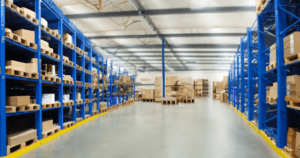
Floor condition is one of the most underestimated factors affecting accuracy, especially for platform scales, pallet truck scales, and weighbridges.
Problems caused by poor floor conditions
Uneven floors, whether they be soft, flexible or damaged cause load distribution issues and movement throughout the loadcells, leading to inconsistent weight readings. Place scales on a solid, level or reinforced surfaces to ensure that there is no uneven weight distribution or movement of the scale.
Scales rely on stability. If the floor moves by even a few millimetres, it changes the alignment of the weighing mechanism and centre-of-load position. This leads to unpredictable measurement errors.
If you spot issues with your floor or your scales are inaccurate, the first and foremost action you can take is to level the flooring under or around the equipment. Alternatively, adjustable feet enable scales to be levelled properly, while pit-mounted installations are perfect for heavy-duty operations.
Airflow and Drafts
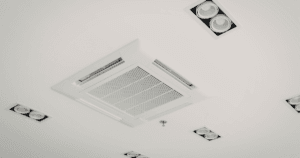
For laboratory or high-precision scales, even slight airflow changes can be measured on the weighing pan. Vents, fans, open windows or doors, even movement of people within smaller areas can make a big difference to weighing accuracy.
Use draft shields or enclosures to prevent a drift in measurements, keep scales away from airflow source and maintain consistent room conditions to ensure that the scales remain as accurate as possible.
Cleanliness and Material Build-up
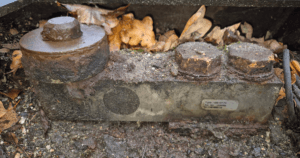
Dirt, debris, or spillage can create contact points or load obstructions. Debris can cause scales to stick or bind, therefore leading to false readings and repeatability issues. Incorporating routine cleaning and maintenance goes a long way toward stable accuracy.
Ensure your environment is suitable for scales that may face spillages from production. Investing in stainless steel scales that can be washed down is the best option for industries such as food or chemical.
Keeping It All Balanced
Even the best scales can only perform as well as their environment allows. To maintain reliable weighing, monitor environmental conditions routinely and work with your service provide to. Where it is possible to, adapt your environment to help reduce vibration.
If you work alongside a service provider who understand your business challenges, they will work with you to get the best out of your scales.
At AWM, we provide a free audit to new and existing customers to ensure their scales are kept in the best place and condition for the environment they will be located.
As part of our ongoing, long-term relationship, we will continue to work with you and your business by providing regular service and calibration suited to your needs.
Fill in the form below or contact us on sales@awmltd.com or 01284 701222 to discuss your weighing and servicing requirements.