


Posts
5 Red Flags When Choosing a Service Provider for Weighing...
Read More

In any industry, from food production and pharmaceuticals to logistics and shipping, weighing scales are the silent heartbeat of operations. Although it is tempting to see a weighing scale as a workhorse that will always keep running, adopting a “if it isn’t broken, don’t fix it” mindset is not always the best plan.
As our Drifting blog explained, scales often don’t suddenly fail; they drift over time. These small inaccuracies may not be immediately noticeable but can accumulate over time, causing significant problems and concerns.
This blog post looks at why a proactive approach is the best way to protect your bottom line.
The Hidden Cost of Inaccuracy

Relying on reactive servicing, which is where equipment is only serviced after it fails, is a gamble that almost always leads to higher costs in the long term.
For example, a tiny 1% error might seem negligible, but for fast throughput or high-value items it can really add up. If your profit margin is 20%, a 1% discrepancy in weight can lead to a 5% reduction in net profit!
An unnoticed or ignored weight error can also cause stock discrepancies, leading to false inventory levels that can cause urgent delivery delays or surplus stock that ties up capital.
Emergency Repairs
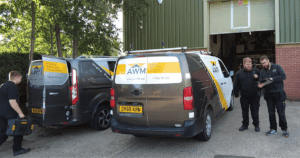
When a scale breaks down, unfortunately, the repair is rarely just the cost of the part. At AWM, we are always looking to support our customers and provide the best possible service costs.
However, reactive repairs can involve costly emergency callouts. A dedicated visit occurs when there is an urgent call out when an engineer is out of the area. Whereas planned maintenance and servicing are booked at much reduced prices.
As well as the engineer’s time, emergency call-outs can mean extended downtime. Although AWM holds large stock of spare parts, there is always the chance that an unplanned part failure might mean a delay on being able to source a replacement, or parts becoming obsolete.
A report by Senseye found that companies lose an average of 25 hours a month to unplanned downtime. For a high-output facility, this lost productivity would dwarf the cost of a planned maintenance contract.
Legal and Regulatory Risks

In the UK, scales that are used for trade (such as buying or selling goods by weight) must be Class III approved. If your scales are subject to an unannounced inspection by Trading Standards and are found to be non-compliant or inaccurate, you could be subject to heavy fines, equipment seizure, or legal proceedings in extreme cases.
AWM tests and certifies Class III approved scales under our ISO accreditation, and our free consultancy service allows customers to get up to speed on weights and measures requirements and gain peace of mind that they are meeting their legal obligations.
We also offer traceable Calibration Certificates that conform to the UKWF code of practice. With planned calibration visits, these certificates will be completed and in place, ready for auditing, whereas reactive maintenance often means you’ll lack the traceable certification required to pass ISO audits.
Reduced Lifespan
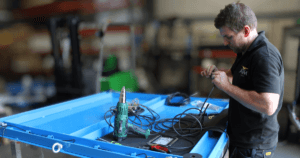
Like a car, skipping the MOT and regular servicing will lead to numerous problems, including regulatory issues and possibly engine or brake failure.
Even small issues, like a broken foot or debris under the platform, can cause damage to your load cells, therefore costing significant sums of money to put right.
What Can You Do to Ensure Your Scales Stay in Tip-Top Condition
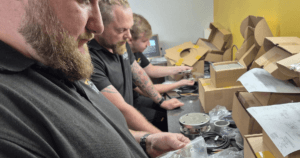
Proactive maintenance can extend the life of your equipment. Our engineers at AWM will look after your scale on a regular basis, ensuring accurate and reliable weighing for your business for years to come.
Fill in the form below or contact sales@awmltd.com or call 01284 701222 to speak to our team to ensure weighing performance stays accurate, reliable and stable for your business.